

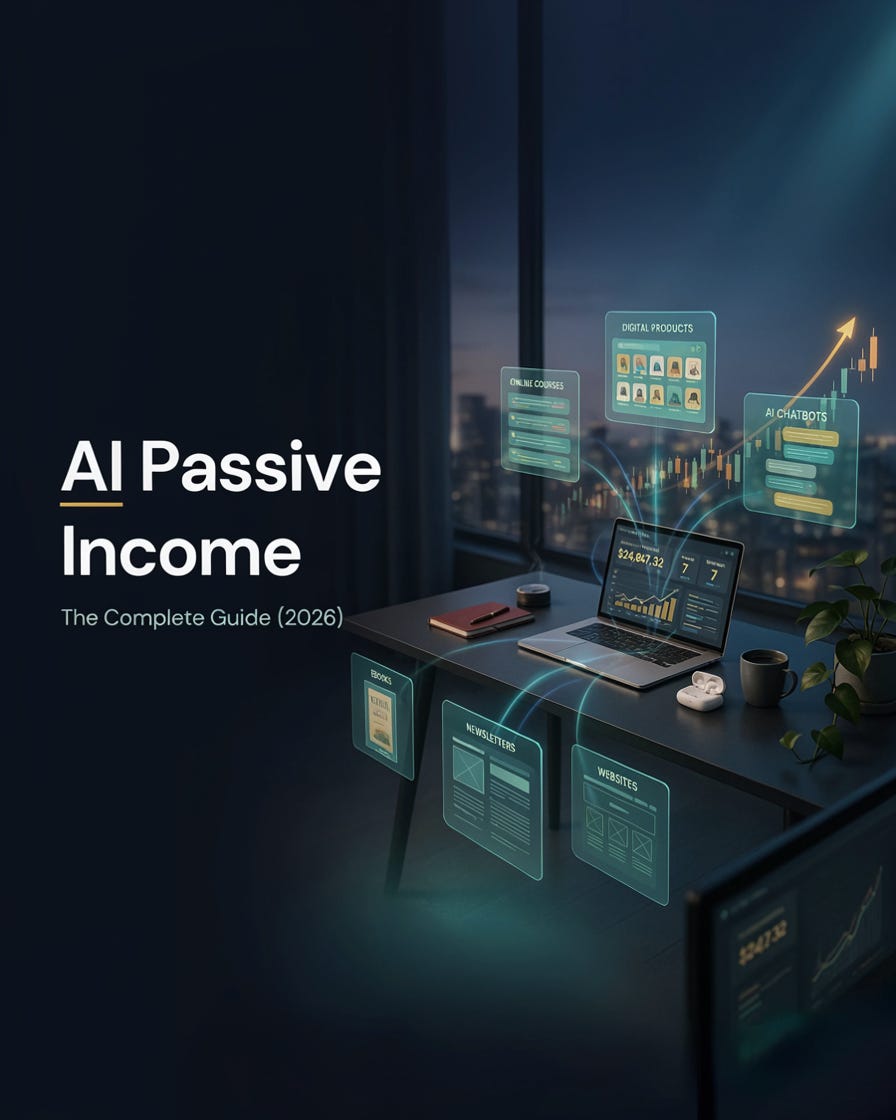
“AI passive income” gets thrown around loosely — half the content out there implies you can set something up in an afternoon and never touch it again. That’s not how any of this actually works. What AI genuinely does is compress the upfront effort a passive income stream used to require, so the “build once” phase takes days instead of months. The income still isn’t free. It’s front-loaded work that pays out repeatedly, not zero work that pays out forever.
This guide breaks down what’s actually working right now, how each method really functions, and how to pick the one that fits the time and skills you already have.
What “Passive” Actually Means Here
True zero-effort income doesn’t really exist outside of things like index fund dividends. What AI-assisted passive income means in practice is a concentrated burst of effort upfront (usually helped along significantly by AI tools), followed by a product or system that keeps generating income with only occasional maintenance—updates, customer questions, and minor tweaks.
The “AI” part isn’t magic — it’s leverage. AI tools cut the time it takes to build the initial asset, which is the single biggest barrier that used to keep people from starting.
The Main AI Passive Income Methods
**1. AI course creation.** Package expertise into a structured course, using AI tools to speed up outlining, scripting, and material creation. Sell it once, earn from it repeatedly. I cover this in depth in a dedicated guide on [building a course with AI tools](#).
**2. AI-written e-books.** Write, edit, and format a book faster with AI assistance, then sell it on platforms like Amazon or Gumroad. Low overhead, no inventory, and a genuinely repeatable model once you understand what sells. Full breakdown here: [selling AI-written e-books](#).
**3. AI-trained chatbots.** Build and sell a custom-trained chatbot for a specific niche — customer service, coaching, internal business use. Higher technical lift than the other methods, but a strong recurring-revenue model once it’s running. Details here: [selling AI-trained chatbots](#).
**4. AI-written newsletters.** Build a niche newsletter using AI to speed up research and drafting, then monetize through subscriptions, sponsorships, or affiliate offers. More ongoing effort than the other methods, but a genuinely durable audience asset. Full guide: [monetizing AI-written newsletters](#).
**5. AI-generated digital products.** Templates, printables, and design assets created with AI tools and sold on marketplaces like Etsy or Creative Market. Low barrier to entry, works well as a starting point before moving to higher-effort methods.
**6. Niche websites with AI-assisted content.** Build a content-focused site around a specific niche, using AI to speed up article production, then monetize through ads or affiliate links. Longer runway to real income than the other methods, but a solid long-term asset once it’s established.
How to Pick the Right One
Two honest filters matter more than what’s trendy:
**How much ongoing effort can you realistically commit?** Newsletters and niche websites need continued attention to keep growing. E-books, courses, and digital products are closer to true “build once”—once they’re live, the ongoing work is lighter.
**What do you already know?** AI speeds up execution, but it doesn’t replace expertise. A course or e-book works best when it’s built on something you genuinely understand. A chatbot works best when you understand the niche it’s serving. Don’t pick a method because it’s popular — pick the one where AI is removing a bottleneck you already understand how to work around.
A Realistic Starting Plan
1. Pick one method from the list above.
2. Spend a focused week building the core asset — the course outline, the e-book draft, the chatbot’s training data, or the first newsletter issues — using AI to speed up each step.
3. Launch before it feels ready. A live, imperfect product earning real feedback beats a polished one still sitting in drafts.
4. Set a 30-day check-in to evaluate actual results, not assumptions, and adjust from there.
Final Thought
AI passive income works when you treat the “passive” part honestly — real upfront effort, genuinely reduced by AI tools, followed by an asset that keeps paying out with light maintenance. Pick one method, build it properly, and let AI do what it’s actually good at: removing the parts of the process that used to take the longest.
For the deep dive on any of the methods above, check the linked guides—[AI course creation], [AI-written e-books], [AI-trained chatbots], and [AI-written newsletters] each cover the specifics.
Excellent guide, Stephon. I really appreciate the honest filters you mentioned for picking a method. For someone starting with zero technical background, which of these six methods do you think offers the gentlest learning curve when pairing it with AI for the first time? Digital products or e-books?"